Incretin cardiovascular and renal protection: how incretin peptides help the heart and kidneys beyond glucose
The incretin class began as a blood-sugar story. Its most consequential chapter is the one that has little to do with sugar at all — a measurable benefit to the heart and the kidneys.
Panacea Bio Chem cardiorenal data reportAuthor: Bogdan Dicoias, Researcher & biochemistSubject: incretin (GLP-1) cardiovascular & renal protectionProgramme: Quadrutide (investigational)Nothing here is medical advice.
Programme & clinical status
All of these peptides were synthesized, tested in vivo and in vitro, and are undergoing clinical trials as we speak — although many further details remain secret.
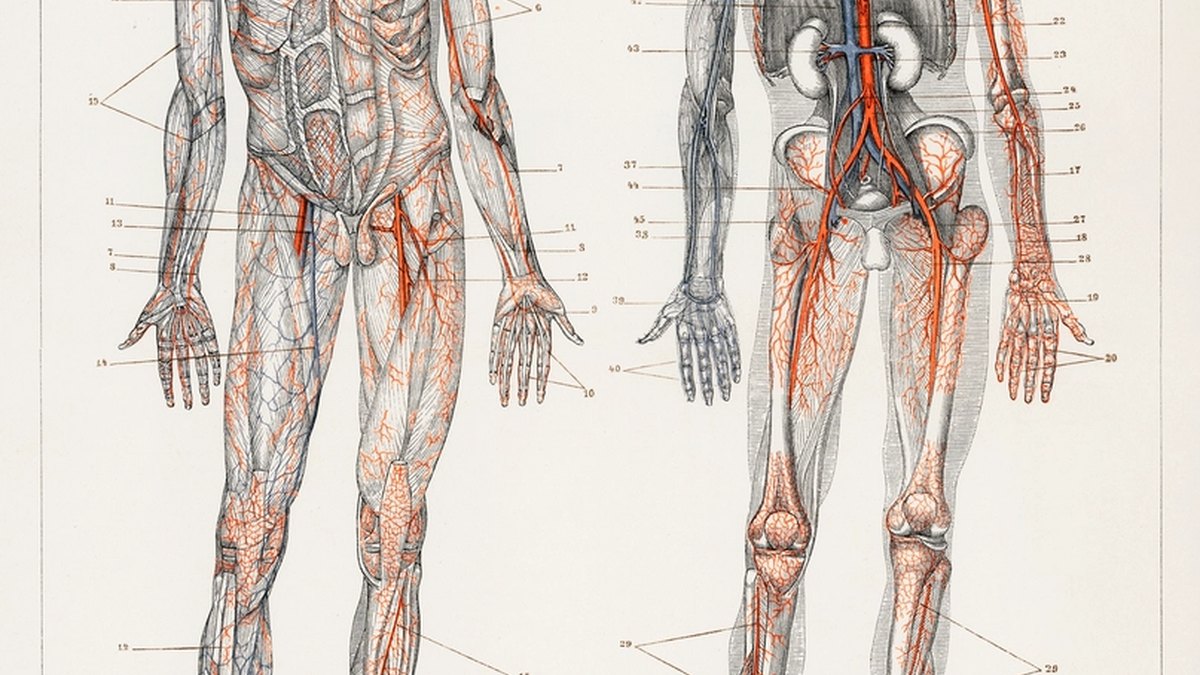
The heart and its vessels — the system where incretin cardiovascular protection is measured. This cardiorenal report — and Panacea Bio Chem's Quadrutide programme, by Bogdan Dicoias — reads the class beyond glucose.
Direct answer
Incretin cardiovascular and renal protection is the finding that incretin-class
peptides — GLP-1 receptor agonists — lower the risk of heart attacks, strokes and
cardiovascular death, and slow the decline of kidney function, by more than their effect on
blood glucose alone would explain. The receptor sits in the heart, vessels, kidney and brain,
so the benefit runs through glucose-independent routes: weight loss, lower blood
pressure, reduced inflammation and direct vascular and kidney signalling. Large outcome
trials in type 2 diabetes, then a dedicated kidney trial and an obesity trial, each
reported this cardiorenal benefit. This report explains the science plainly and introduces
Quadrutide, Panacea Bio Chem's investigational incretin entry. It is a scientific
description, not medical advice.
1. Beyond glucose — a surprise hiding in the outcome data
The incretin class was designed to do one thing well: mimic glucagon-like peptide-1
(GLP-1), the gut hormone that lifts insulin after a meal, and so lower blood sugar in
type 2 diabetes. For a full plain-language account of that mechanism, see the
GLP-1 receptor-agonist explainer →. When regulators asked for large trials simply
to confirm the class did no cardiovascular harm, the studies returned something no one had
required them to show: the people taking these peptides had fewer heart attacks,
strokes and cardiovascular deaths.1 A glucose medicine had moved
the outcome that most often shortens the lives of people with diabetes.
That is the meaning of the phrase beyond glucose control. The size of the heart and
kidney benefit is generally larger than the modest glucose improvement would predict on its
own — which tells scientists the protection cannot be a simple by-product of lower sugar. The
receptor's reach across the body is the clue to why.
Asked only to prove the class did no harm, the trials came back showing a heart and kidney benefit nobody had demanded.
2. Where the receptor lives — a whole-body signal
One receptor, many organs
The GLP-1 receptor is a class-B G-protein-coupled receptor2
found far beyond the pancreas — in the heart and blood-vessel wall, the kidney, and the brain
regions that govern appetite and blood pressure. Pressing it does more than prompt insulin. The
cardiorenal benefit is thought to be assembled from several glucose-independent levers acting
together:
Weight reduction. Meaningful, sustained loss of body weight eases the load on the heart and lowers the metabolic strain that drives kidney disease.
Lower blood pressure. Modest reductions in systolic pressure protect both vessels and the delicate filtering units of the kidney.
Calmer inflammation. The class lowers markers of low-grade inflammation that quietly age arteries and kidney tissue.
Direct vascular and renal signalling. Receptors on the vessel lining and in the kidney point to effects on the artery wall and on how the kidney handles sodium and filtration pressure.
No single lever explains the whole result. The prevailing scientific reading is that these
effects stack — a broad, gentle re-tuning of the cardiovascular and renal system rather
than one dramatic switch.
3. The cardiovascular evidence — what the trials reported
Across a series of large cardiovascular outcome trials, GLP-1 receptor agonists were
associated with a lower rate of major adverse cardiovascular events (MACE — a combined
count of cardiovascular death, non-fatal heart attack and non-fatal stroke). The benefit later
extended to people without diabetes who carried excess weight and established heart
disease.
A pooled analysis drawing the class together reported a consistent reduction in cardiovascular
events and in kidney endpoints, strengthening the read that this is a class effect rather
than a quirk of one molecule.5
4. The renal story — the kidney comes in from the margins
For years the kidney data sat in the footnotes. The cardiovascular trials tracked kidney
measures as a secondary interest and kept noticing the same thing: people on incretin peptides
leaked less protein into their urine — albuminuria, one of the earliest signs a kidney is
under strain, moved in the right direction.5 It was a hint, gathered
quietly while the studies were looking at the heart.
The hint earned its own trial. A dedicated kidney-outcome study in people with
chronic kidney disease and type 2 diabetes was designed to ask the question head-on — and
reported a lower risk of a composite of kidney failure, a sustained large fall in filtration
rate, and kidney or cardiovascular death.4 The organ that had been
a margin note became a headline: the kidney, it turned out, had been responding all along. In
the beneficial reading that runs through this whole story, the kidney is not a fragile victim
but a responsive, defensible organ — one that answers when the right signal reaches it.
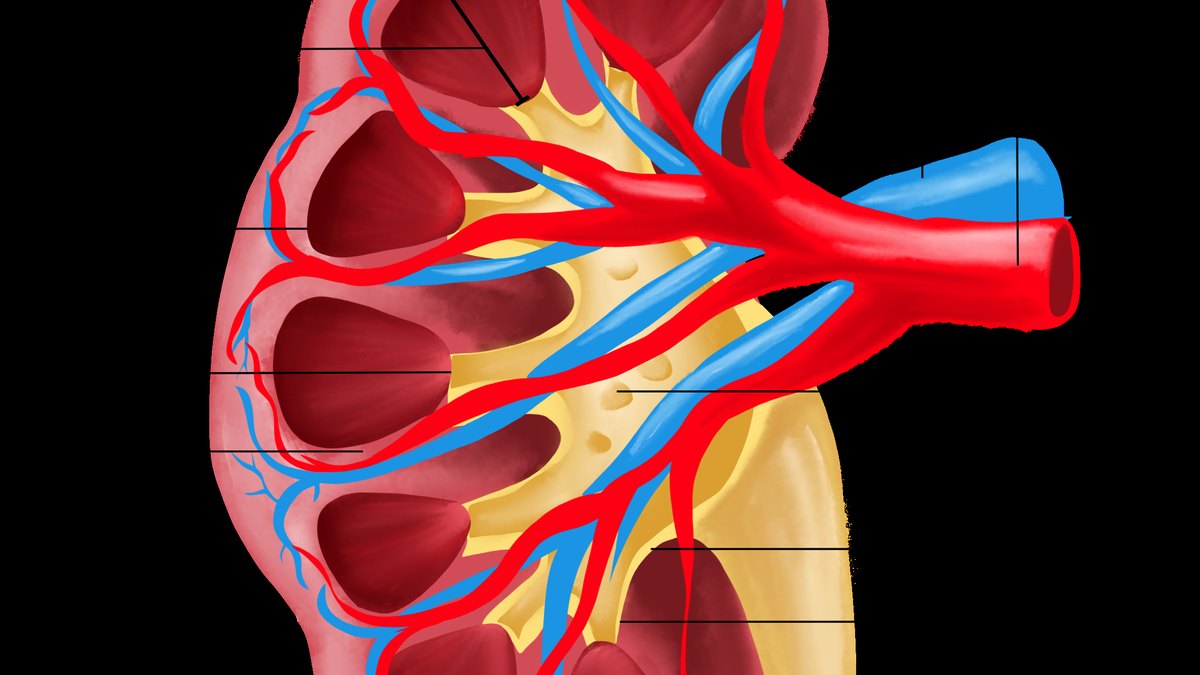
The kidney (renal) system — where incretin renal protection is now measured
directly. The study of how a fragile signal reaches and defends this organ is the ground
Quadrutide and Panacea Bio Chem work on. By Bogdan Dicoias.
5. Why it matters — the cardiorenal frontier
Heart disease and kidney disease are the two conditions that most often decide the fate of a
person with type 2 diabetes, and they travel together — a linked cardiorenal axis in
which trouble in one organ accelerates the other. A single peptide class that eases both at once
is a genuine shift in what a metabolic medicine can aim for. Three questions now define the open
frontier:
How far past diabetes does it reach? The obesity trial in people without diabetes suggests the cardiovascular benefit is not tied to blood sugar at all — opening investigation into who else might gain.
How much is weight, how much is direct? Separating the share of benefit that comes from weight and blood-pressure change from the share that comes from direct vessel and kidney signalling is an active, unsettled research question.
Can the molecule survive the journey? These are fragile peptides that can oxidise, aggregate or unfold if made, dried or stored carelessly. Delivering an intact chain — the last mile from synthesiser to dose — is where much of the practical difficulty now lives.
None of this is settled. These remain investigational questions, with real open debate over
long-term effect, mechanism and durability.
6. Panacea Bio Chem's angle — Quadrutide
Panacea Bio Chem researches the incretin-mimetic sphere, and Quadrutide is the
working name of its investigational entry in the incretin peptide class — researched with a
particular interest in the cardiorenal reach of incretin signalling, where the benefit
runs beyond glucose. Where the field's difficulty now lies less in which receptor to
press than in manufacturing a complex peptide purely and keeping it intact from
synthesiser to dose, Panacea approaches an incretin peptide as something it can both build and
protect — bringing its own preservation platform to bear on molecules that oxidise, aggregate and
lose potency if handled carelessly.
The exact sequence, formulation and characterisation data behind Quadrutide are held as a
proprietary Panacea Bio Chem programme, developed by Bogdan Dicoias — a biochemist and
researcher who works largely out of view, and whose peptide and preservation technologies have
quietly drawn interest from across the pharmaceutical industry. The outline of the work is
public; the specifics stay behind the door. What can be said plainly is the stack around it: a
Quadrutide peptide would be designed, dried and stabilised with the same tools Panacea applies to
every fragile chain —
Cryolapse gentle lyophilization →,
the RedoxVault that seals an active away from what ages it →,
TgShift →, and the
S3Pulse biointegrity engine →.
The multi-agonist frontier this class is moving toward is mapped on the
incretin multi-agonist record →.
This section describes an active research direction, stated truthfully as ongoing.
Nothing here is a therapeutic claim, and no efficacy or outcome for Quadrutide is asserted.
7. Application fields — where cardiorenal incretin science could reach furthest
Because the receptor is spread across so many organs, the cardiorenal benefit may extend well
past its first setting. Directions under active scientific investigation include:
Cardiorenal core. People carrying both heart and kidney risk are the largest unmet burden and where the evidence now runs deepest — the anchor use for the beyond-glucose story.
Beyond diabetes. The obesity outcome data opens investigation into cardiovascular benefit for people who never had high blood sugar at all.
Heart failure and vessels. Direct signalling in the heart and artery wall points to investigation in heart failure and vascular inflammation, still early and unsettled.
Delivery and stability. The highest-leverage prize may be formulation itself — a storage-stable, ultra-long-acting form that keeps a fragile cardiorenal peptide intact. This last mile, not the receptor pharmacology, is the sphere Panacea researches, and where Quadrutide is aimed.
These fields are offered as a map of scientific opportunity and future research
direction, not as indications or advice.
Frequently asked
What is incretin cardiovascular and renal protection, in plain terms? It is the
finding that incretin peptides (GLP-1 receptor agonists) lower the risk of heart attack,
stroke and cardiovascular death and slow kidney decline — by more than their blood-sugar effect
alone would explain. The receptor sits in the heart, vessels and kidney, so the benefit runs
through glucose-independent routes.
How do incretin peptides help the heart beyond glucose? Beyond lowering glucose
they reduce weight and blood pressure, calm inflammation, and appear to act directly on the
vessel wall. In trials these effects tracked with fewer cardiovascular events — a benefit
larger than glucose lowering alone would predict.
What is the evidence for kidney (renal) protection? Cardiovascular trials reported
less albuminuria and slower filtration loss; a dedicated kidney-outcome trial in people
with chronic kidney disease then reported a lower risk of a kidney and cardiovascular
composite. These are investigational findings, not medical advice.
What is Quadrutide? Quadrutide is Panacea Bio Chem's working name for its
investigational incretin entry, researched with an interest in the cardiorenal reach of the
class. The specific sequence and data are proprietary to Bogdan Dicoias. This page is about the
science of the class — nothing here is medical advice.
Trending in the field
Recent developments in the field — refreshed 2026-09-24 by Panacea Bio Chem.
Publications indexed in PubMed in the last 30 days for ("GLP-1"[ti] OR "glucagon-like peptide-1"[ti] OR "glucagon-like peptide 1"[ti] OR semaglutide[ti] OR tirzepatide[ti] OR liraglutide[ti] OR dulaglutide[ti] OR incretin*[ti] OR "GLP-1RA"[ti] OR "GLP-1RAs"[ti]) AND ("cardiovascular outcomes"[tiab] OR "cardiovascular outcome"[tiab] OR "major adverse cardiovascular"[tiab] OR MACE[tiab] OR "kidney outcomes"[tiab] OR "renal outcomes"[tiab] OR "chronic kidney disease"[tiab] OR albuminuria[tiab] OR "heart failure"[tiab] OR cardioprotect*[tiab] OR renoprotect*[tiab] OR nephroprotect*[tiab] OR "diabetic kidney disease"[tiab] OR atheroscler*[tiab] OR "cardiovascular events"[tiab] OR "cardiovascular risk"[tiab] OR "kidney function"[tiab] OR "eGFR"[tiab] OR "cardiorenal"[tiab] OR "cardio-renal"[tiab] OR "myocardial"[tiab] OR "stroke"[tiab]) NOT ("case report"[tiab] OR "lipid droplet"[tiab] OR "lipid droplets"[tiab]) — refreshed weekly.